 nGeeks.com English Edition
 | VS |  |
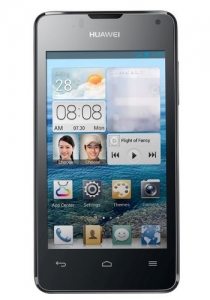
Huawei Ascend Y300
The Huawei Ascend Y300 is a smartphone with Android 4.1 (Jelly Bean) operating system. Among its major hardware components it features a CPU Qualcomm Snapdragon S4 (MSM8225) of 2 cores at 1 GHz, which is able to move the software smoothly thanks to 0.5 GB of RAM.
To store photos, videos and installed applications it has an internal memory with a capacity of 4 GB and microSD Expansion slot.
If we focus on other more visible details, we must say it has a TFT screen of 4 inches with a resolution of 800 x 480 pixels.
For photography functions we have 5-megapixel camera in the back of the device with video recording and LED Flash, and a 0.3-megapixel Front camera.
Regarding the connectivity features and device communication systems we have: Wi-Fi, Bluetooth, A-GPS, FM Radio and USB. And last but not least, we can not forget the 3.5 mm Headphone Jack or the sensors required for some features of the smartphone: Accelerometer, Gyroscope, Proximity, Light, Compass.
The battery of the device is 1730 mAh, which along with other hardware and casing gives us total dimensions of 124.5 x 63.8 x 11.2 mm, while the weight is 130 grams.
Finally, Huawei Ascend Y300 costs approximately $99 in its SIM free version.
Huawei Ascend G740
The Huawei Ascend G740 runs Android 4.1 (Jelly Bean) out-of-the-box. As for the technical side we can speak of a Qualcomm Snapdragon 400 processor with 2 cores running at 1.2 GHz frequency, which will be responsible for executing applications smoothly with the help of a RAM of 1 GB.
Touch screen IPS on this smartphone has a diagonal size of 5 inches, with a native resolution that reaches 1280 x 720 pixels.
Another important feature on any smartphone is the internal storage capacity, and in this case we have 8 GB with microSD Expansion slot. To take photos it has 8-megapixel rear camera with LED Flash and video recording @ 1080p, and a 1-megapixel Front camera.
Moreover, the connectivity of the Ascend G740 is composed by Wi-Fi, Bluetooth, A-GPS, including some features that are not present in all smartphones, as can be FM Radio, 4G / LTE and sensors Accelerometer, Gyroscope, Proximity, Light, Compass. On the side we found a 3.5 mm Jack for headphones and USB.
This terminal has dimensions of 139.5 x 71.5 x 9.3 mm with a total weight of 150 grams, and the battery has a capacity of 2400 mAh.
Pricewise, the Huawei Ascend G740 SIM free can be found in stores from about $229.
Specs and Price Comparison
| Huawei Ascend Y300 | Huawei Ascend G740 | |
| Operating system | Android 4.1 (Jelly Bean) | Android 4.1 (Jelly Bean) |
| Screen | 4 inch | 5 inch |
| Panel | TFT | IPS |
| Resolution | 800 x 480 pixels | 1280 x 720 pixels |
| Pixel density | 233 ppi | 294 ppi |
| Processor | Qualcomm Snapdragon S4 (MSM8225) | Qualcomm Snapdragon 400 |
| Cores | 2 | 2 |
| CPU frequency | 1 GHz | 1.2 GHz |
| RAM | 0.5 GB | 1 GB |
| GPU | Adreno 203 | Adreno 305 |
| Internal storage | 4 GB | 8 GB |
| Expansion slot | Yes | Yes |
| Memory Card Type | microSD | microSD |
| Rear camera | Yes | Yes |
| LED Flash | Yes | Yes |
| Rear camera resolution | 5 megapixel | 8 megapixel |
| Rear camera video recording | 1080p | |
| Front camera | Yes | Yes |
| Front camera resolution | 0.3 megapixel | 1 megapixel |
| Wi-Fi | Yes | Yes |
| Bluetooth | Yes | Yes |
| A-GPS | Yes | Yes |
| GLONASS | No | No |
| Infrared | No | No |
| NFC | No | No |
| 4G / LTE | No | Yes |
| FM Radio | Yes | Yes |
| USB | Yes | Yes |
| MHL | No | No |
| HDMI | No | No |
| Sensors | Accelerometer, Gyroscope, Proximity, Light, Compass | Accelerometer, Gyroscope, Proximity, Light, Compass |
| Battery | 1730 mAh | 2400 mAh |
| Talk time | 5 hours | - |
| Standby time | 320 hours | - |
| Dimensions | 124.5 x 63.8 x 11.2 mm | 139.5 x 71.5 x 9.3 mm |
| Weight | 130 grams | 150 grams |
| Notes | DTS, Dual microphones, Emotion UI 1.5, 5 Second fast boot | |
| Price | 99 $ | 229 $ |
Advantages of the Huawei Ascend Y300
- Dimensions (124.5 x 63.8 x 11.2 mm)
- Weight (130 grams)
- Price (99 $)
Advantages of the Huawei Ascend G740
- Screen (5 inch)
- Resolution (1280 x 720 pixels)
- Pixel density (294 ppi)
- CPU frequency (1.2 GHz)
- RAM (1 GB)
- Internal storage (8 GB)
- Rear camera resolution (8 megapixel)
- Front camera resolution (1 megapixel)
- 4G / LTE
- Battery (2400 mAh)